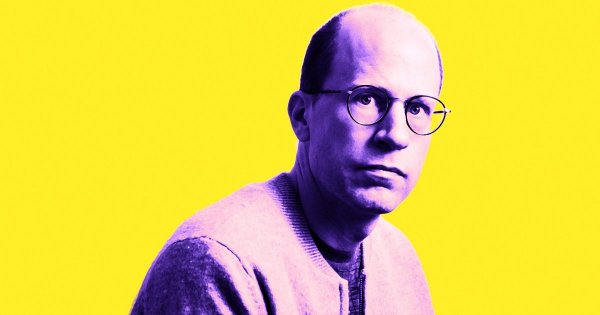
Philosopher Nick Bostrom, whose 2014 book “Superintelligence” shaped how the tech industry thinks about artificial intelligence, now says the world is “on the track towards” artificial general intelligence and that he is not necessarily opposed to it. Speaking to The London Standard, Bostrom said of recent AI progress: “It’s all happening now. I’m quite impressed by the speed of developments that we’ve seen in the past several years.”
Bostrom’s earlier work helped popularize the idea that AI could become smarter than humans. When he wrote “Superintelligence” in the early 2010s, he told the Standard, he was mostly speculating. Now that AGI appears closer, some of his views are shifting. In 2019 he told Business Insider that “AI is a bigger threat to human existence than climate change.” Asked recently whether that remained his belief, he demurred, saying: “There remains always the possibility that human civilization might destroy itself in some other way, such that we don’t even get the chance to try our luck with superintelligence.”
He also suggested that a radically reorganized society could be beneficial. “Completely reorganizing society could be a positive thing,” Bostrom said. As AGI approaches, he listed four key challenges: aligning AI with human values and safety, governing AGI so humans do not use it for evil, respecting the moral status of digital minds, and preventing superintelligences from going after each other.
The first two are familiar goals for AI laboratories. The latter two are less conventional. Bostrom said it is possible that some advanced AIs “will have various degrees and forms of moral status.” On superintelligence conflict, he posited that if alien races with their own mega-advanced AI came to Earth, humans could end up as peacekeepers. “If any of those types of [alien] beings exist,” he said, an “important desideratum when we create our own superintelligence is to make sure that it will get along with these other super beings.”
On the near-term economy, Bostrom was more concrete. “The goal is full unemployment,” he said. “We’d need to find different bases for our self-worth and dignity and different ways of filling our lives and days, aside from having to work for a living.” He described himself as a “fretful optimist” and said a post-work world could be splendid. “Ultimately, much greater space for human flourishing could be unlocked through advanced AI,” he said. “If things go well, people will look back on 2025 and shudder in horror at the lives we lived.”
Bostrom’s career has included controversy. A racist email he sent in the 1990s was uncovered in 2023, and his Future of Humanity Institute at Oxford was shut down the following year, which he described as “death by bureaucracy.” Those events form the backdrop to his current reflections on AI.
Editorial Notes