ArcadeRealm
Sign In
  • Home
  • Science
  • Ai
  • Home
  • Topics
  • Contact
  • Sign In
  • Account

Topics

  • All
  • Ai
  • Science
  • Tyndall Institute Develops Scalable Entangled Photon Source Using Quantum Dots

    Tyndall Institute Develops Scalable Entangled Photon Source Using Quantum Dots

    Researchers at the Tyndall National Institute have engineered a scalable array of electrically driven quantum dots that can produce entangled photons, offering physicists greater control over photon entanglement. The method uses conventional semiconductor fabrication and easily-sourced materials, potentially accelerating progress toward quantum computing.

    ScienceDusk Vale2026-08-27
  • Harvard's HouseZero Retrofit in Cambridge Targets Ultra-Efficient Building Standard

    Harvard's HouseZero Retrofit in Cambridge Targets Ultra-Efficient Building Standard

    The Harvard Center for Green Buildings and Cities is retrofitting a pre-1940s house in Cambridge, Massachusetts, into HouseZero, a building designed to produce all its own power and achieve the most rigorous efficiency standards for a retrofit to date. The project aims to show that ultra-efficient green design is achievable for average existing structures.

    ScienceDusk Vale2026-08-27
  • Voyager 1 Crossed the Heliopause, Not the Solar System's Edge

    Voyager 1 Crossed the Heliopause, Not the Solar System's Edge

    Voyager 1 crossed the heliopause, the boundary where the solar wind gives way to interstellar wind, a 2013 study confirmed through a 40-fold rise in electron density. But under the Sun's gravity and far inside the Oort cloud, the probe has not truly left the solar system.

    ScienceDusk Vale2026-08-27
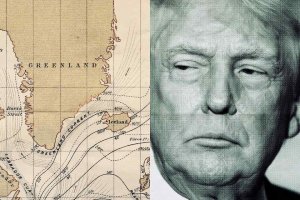
  • Trump's Greenland Interest Linked to Melting Ice and Mineral Wealth

    Trump's Greenland Interest Linked to Melting Ice and Mineral Wealth

    Donald Trump's continued interest in acquiring Greenland may be driven by the island's melting ice revealing valuable minerals like graphite, zinc, and rare earths, according to a New York Times analysis. Greenland lost 105 billion metric tons of ice from September 2024 to September 2025, and its ice sheet has shrunk by 2,000 square miles since 1985, exposing resources as the climate warms.

    ScienceDusk Vale2026-08-27
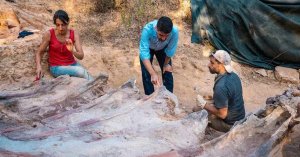
  • Portugal Backyard Dig Uncovers Possible Largest Dinosaur in Europe

    Portugal Backyard Dig Uncovers Possible Largest Dinosaur in Europe

    A property owner in Pombal, Portugal, discovered dinosaur bone fragments in his backyard in 2017, leading to an excavation that has now uncovered what may be the largest sauropod fossil ever found in Europe. The University of Lisbon announced the find, highlighting the rare preservation of ribs in their original anatomical position.

    ScienceDusk Vale2026-08-27
  • UK to Urge Cutting Trivial Emails at COP26, But Climate Benefit Is Tiny

    UK to Urge Cutting Trivial Emails at COP26, But Climate Benefit Is Tiny

    UK officials are expected to ask people to send fewer unnecessary emails at next year's COP26 climate summit, citing carbon savings. But the BBC notes that one fewer email per person daily would cut only about 0.0037 percent of the UK's annual greenhouse gas emissions, and an expert says the actual savings are likely far smaller.

    ScienceDusk Vale2026-08-27
  • Massachusetts Bill Sets 100% Renewable Energy Goal by 2035

    Massachusetts Bill Sets 100% Renewable Energy Goal by 2035

    Massachusetts Democratic lawmakers have introduced SD.1932, the 100 Percent Renewable Energy Act, which would raise the state's renewable portfolio standard to 100% by 2035 and phase out fossil fuels by 2050. The bill also aims to eliminate fossil fuel use in heating and transportation and includes a provision for clean energy workforce development.

    ScienceDusk Vale2026-08-27
  • UCSD Scientists 3D-Print Micro-Fish Robots for Targeted Drug Delivery

    UCSD Scientists 3D-Print Micro-Fish Robots for Targeted Drug Delivery

    Researchers at UC San Diego have developed tiny 3D-printed 'micro-fish' robots that can swim through fluids, remove toxins, and potentially deliver drugs to hard-to-reach areas of the body. The technology, still in development, is backed by grants from the National Science Foundation and the National Institutes of Health.

    ScienceDusk Vale2026-08-27
  • US Soldier Indicted Over Polymarket Bets on Venezuela Operation

    US Soldier Indicted Over Polymarket Bets on Venezuela Operation

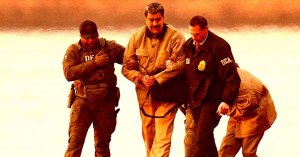
    An active-duty US Army soldier, Gannon Ken Van Dyke, has been indicted on charges of using classified information to place over $33,000 in Polymarket bets tied to the US military operation in Venezuela. The case, unsealed in Manhattan federal court, highlights concerns about insider trading on prediction markets.

    ScienceDusk Vale2026-08-27
  • US Intelligence Report Warns China Is Weaponizing Space

    US Intelligence Report Warns China Is Weaponizing Space

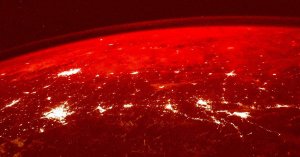
    A new ODNI Global Risk Assessment warns that China is expanding military and commercial activity in space, including capabilities to disable or destroy satellites. Director Avril Haines told lawmakers China is focused on achieving space leadership, while China also prepares to build a new orbital station.

    ScienceDusk Vale2026-08-27
  • Canadian Military Documents Reveal Confusion Over Pokémon Go Trespassers

    Canadian Military Documents Reveal Confusion Over Pokémon Go Trespassers

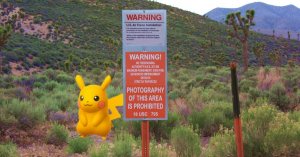
    CBC News obtained hundreds of pages of Canadian military documents showing confusion after Pokémon Go players wandered onto bases following the game's July 2016 launch. Emails reveal officers unfamiliar with the game, with one suggesting hiring a 12-year-old for help, while another noted a possible museum visitor boost.

    ScienceDusk Vale2026-08-27
  • FOCAS Project Ends After Using Robotic Bees to Infiltrate Hives

    FOCAS Project Ends After Using Robotic Bees to Infiltrate Hives

    A five-year European research initiative called FOCAS has concluded after developing robotic bees and fish that blend into animal societies. Researchers say the robots allowed an inside view of honeybee colonies and could eventually help steer bees toward survival as they face potential extinction.

    ScienceDusk Vale2026-08-27
  • Columbia Astronomers Report First Evidence of an Exomoon Near Kepler-1625b

    Columbia Astronomers Report First Evidence of an Exomoon Near Kepler-1625b

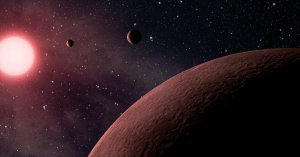
    Columbia University researchers announced Wednesday they found the first evidence of an exomoon, a moon orbiting a planet beyond our solar system, around Jupiter-sized Kepler-1625b about 4,000 lightyears away. The team used NASA's Kepler survey and the Hubble telescope but cautions the work is preliminary and needs confirmation.

    ScienceDusk Vale2026-08-27
  • Harvard Study: Melting Ice Is Warping Earth's Crust, Not Just Raising Seas

    Harvard Study: Melting Ice Is Warping Earth's Crust, Not Just Raising Seas

    A Harvard study published in Geophysical Research Letters found that Earth's crust rebounds and warps as ice melts, with deformations larger than previously thought. The effects can influence ecosystems for thousands of years and may create a feedback loop that displaces more ice, according to planetary scientist Sophie Coulson.

    ScienceDusk Vale2026-08-27
  • EPA Sets Zero Dollar Value on Human Life in Pollution Rule Calculations

    EPA Sets Zero Dollar Value on Human Life in Pollution Rule Calculations

    The EPA has updated its cost-benefit analysis to assign a zero value to human life, eliminating the 'value of a statistical life' metric previously set at $11.7 million. This change is expected to weaken regulations on ozone and fine particulate matter, potentially reversing gains made since the Clean Air Act, according to Fortune and economist Michael Greenstone.

    ScienceDusk Vale2026-08-27
  • US July Heat Tops 1936 Dust Bowl as Drought and Wildfires Spread

    US July Heat Tops 1936 Dust Bowl as Drought and Wildfires Spread

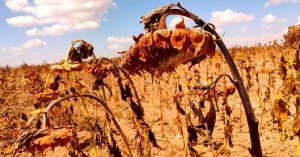
    NOAA data show the contiguous US averaged 76.89 degrees Fahrenheit in July, hotter than July 1936 during the Dust Bowl, according to the source. Meteorologist Jeff Masters attributes the record to a strong El Niño layered on human-caused climate change, with drought and wildfires compounding the impact.

    ScienceDusk Vale2026-08-27
  • Hiroshima and the Nuclear Age: What the First Atomic Bomb Revealed

    Hiroshima and the Nuclear Age: What the First Atomic Bomb Revealed

    The United States dropped the first atomic bomb on Hiroshima on August 6, 1945, killing about 80,000 people instantly, with total deaths from the Japan blasts estimated at over 200,000. The United Nations calls nuclear weapons the most dangerous on Earth, and the source asks how far disarmament has come.

    ScienceDusk Vale2026-08-27
  • DC Marijuana Justice to Give Free Cannabis at Vaccination Sites

    DC Marijuana Justice to Give Free Cannabis at Vaccination Sites

    DC Marijuana Justice plans to distribute free cannabis bags to people vaccinated against COVID-19 at select Washington, D.C. locations. The group aims to incentivize vaccinations and recruit recipients for federal marijuana legalization advocacy.

    ScienceDusk Vale2026-08-27
  • MIT's Carbon Black Concrete Could Turn Foundations Into Energy Storage

    MIT's Carbon Black Concrete Could Turn Foundations Into Energy Storage

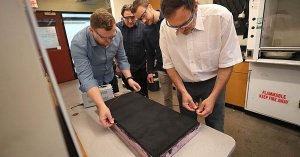
    MIT researchers developed a concrete supercapacitor using cement, water, and carbon black that can store and release electrical energy. The proof-of-concept can power a 10-watt LED for 30 hours, and the team is planning a larger version to meet a home's daily energy needs.

    ScienceDusk Vale2026-08-27
  • Beijing to End Coal Use in Downtown and Plain Areas by 2020

    Beijing to End Coal Use in Downtown and Plain Areas by 2020

    Beijing's municipal development and reform commission announced Tuesday that coal use will be nearly eliminated in the city's plain areas and six downtown districts by 2020, with a citywide coal consumption cap of 5 million tonnes. The plan aims to replace coal-fired heating and industrial boilers with clean energy, electricity, and gas, while renewable sources are projected to exceed 8 percent of total energy consumption.

    ScienceDusk Vale2026-08-27
  • ‹
  • 1
  • 2
  • 3
  • ›
ArcadeRealm
  • Ai
  • Science
  • Privacy
  • Terms
  • Disclaimer
  • Contact
  • About
  • Editorial Policy
  • Sign In
  • My Account

© 2026  ArcadeRealm. All rights reserved.

Member

Sign in to continue

Please enter your username or email.
Please enter your password.
Please enter a username.
Please enter a valid email.
Password must be at least 6 characters.
Passwords do not match.