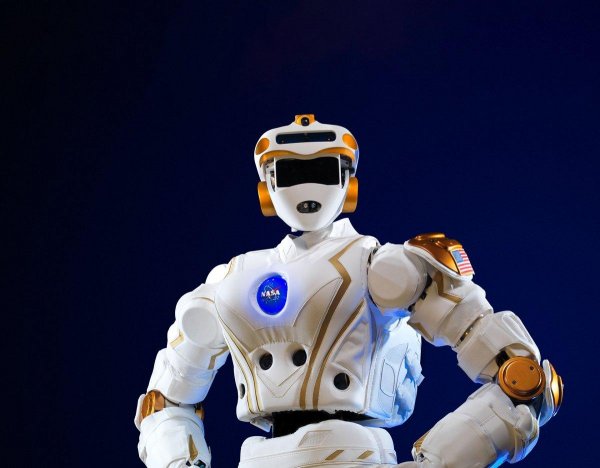
Two leading robot ethics researchers are calling for robots to be equipped with an "ethical black box" that would record their decisions and movements, drawing on a safety measure long used in aviation. Alan Winfield, professor of robot ethics at the University of the West of England in Bristol, and Marina Jirotka, professor of human-centered computing at Oxford University, argue that as robots move beyond factories and laboratories into human environments, such recording devices will become increasingly important.
The proposed black box would capture all decisions, the bases for those decisions, movements, and sensory data. In the event of an accident, investigators could use the data to reconstruct what happened. Winfield told The Guardian that without an internal datalog, it would be "more or less impossible to tell what happened" when an accident investigator arrives. The recorded data could also help robots explain their actions in language human users can understand, potentially improving human-robot relationships.
Aviation Safety as a Model
Winfield and Jirotka point to the aviation industry, whose safety record they attribute not only to technology and design but also to stringent safety protocols and accident investigation. The industry introduced black boxes and cockpit voice recorders to help investigators determine causes of crashes and derive lessons for prevention.
The proposal reflects wider concerns about managing artificial intelligence ethics. Missy Cummings, director of the Human and Autonomy Lab at Duke University, told the BBC in March that oversight of AI is a major problem with no solution yet. "Presently, we have no commonly accepted approaches," Cummings said. "And without an industry standard for testing such systems, it is difficult for these technologies to be widely implemented."
Industry and Nonprofit Efforts
In September 2016, Amazon, Facebook, Google, IBM, and Microsoft formed the Partnership on Artificial Intelligence to Benefit People and Society, focused on ensuring AI is deployed ethically, fairly, and inclusively. Apple joined in January, and many other tech companies have since joined. Separately, the Future of Life Institute, founded by experts from DeepMind and MIT, created the Asilomar AI Principles, a set of guidelines for robotics to ensure AI remains beneficial. Its Scientific Advisory Board includes Stephen Hawking, Frank Wilczek, Elon Musk, Nick Boström, and Morgan Freeman.
While no specific timeline or implementation plan for the ethical black box has been announced, the proposal adds a concrete technical measure to ongoing debates about AI accountability.
Editorial Notes