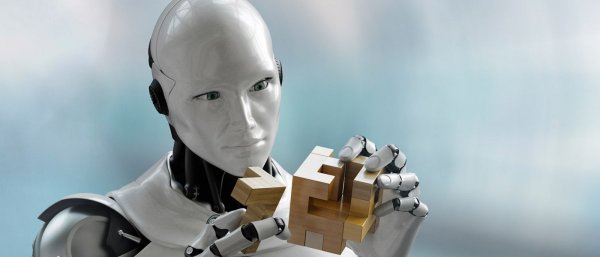
Jürgen Schmidhuber, a pioneer of deep learning neural networks, told an audience at WIRED2016 that by 2050 there will be "trillions of self-replicating robot factories on the asteroid belt," and that a few million years later AI will colonize the galaxy. Schmidhuber, described as the "father of very deep learning," built foundations for AI systems used in today's smartphones.
He said AI will be crucial for gathering resources, most abundantly found in space. Orbital robot factories, manned or unmanned by AI, would be capable of self-replication and space exploration. These AI will be scientists, he said, and in a few million years will naturally explore the galaxy out of curiosity, setting their own goals. "Humans are not going to play a big role there, but that's ok," Schmidhuber said.
Current AI Capabilities
Deep learning neural networks, designed to mimic human brain connections and learn from continuous exposure to data, already execute speech and image recognition fairly well. They can navigate and drive, carry out medical diagnoses, and engage in pharmaceutical research. "Networks figure out over time which inputs are important and which aren't," Schmidhuber explained. "We train a stupid neural network to do the same as a doctor, based on lots of training examples. It becomes as good or better than the best competitor and rivals human performance now."
He added that curiosity and creativity, coming up with new experiments to learn more about how the world works, make AI better problem solvers. "It took just a few million years [of evolution] to get to human intelligence, and computers are faster," he said.
Editorial Notes