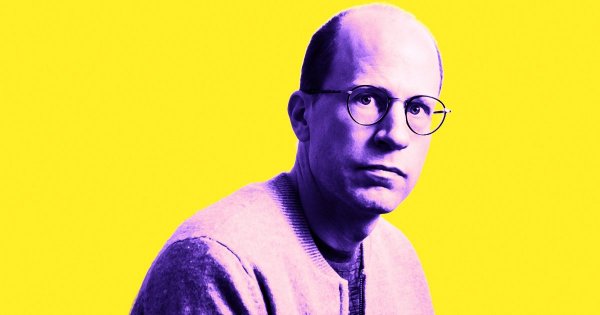
Two decades after proposing that our reality might be a computer simulation, philosopher Nick Bostrom is watching his predictions about artificial intelligence unfold in real time. In a recent interview with The London Standard, the Oxford academic acknowledged that the pace of AI development has exceeded his expectations, and that humanity is now "on the track towards" artificial general intelligence (AGI)—the point where machines match human cognitive abilities.
Bostrom first gained widespread attention in 2003 with a Philosophical Quarterly paper suggesting we may all be living inside a simulation—a concept that later captivated tech figures like Elon Musk, Bill Gates, and Sam Altman. His 2014 book "Superintelligence: Paths, Dangers, Strategies" detailed how AI could surpass human intellect, while his 2024 work "Deep Utopia: Life and Meaning in a Solved World" explored the implications of an AI-perfected existence.
The philosopher's career has not been without turbulence. In 2023, a racist email from the 1990s surfaced, sparking controversy. The following year, Oxford's Future of Humanity Institute, which Bostrom founded, was closed—a move he described as "death by bureaucracy."
Despite these setbacks, Bostrom's latest reflections signal a notable shift. In 2019, he told Business Insider that AI posed a greater threat to humanity than climate change. Now, he is more circumspect, noting that "there remains always the possibility that human civilization might destroy itself in some other way," and that superintelligence might never get the chance to emerge.
More strikingly, Bostrom now views AGI as an inevitability he does not oppose. "Completely reorganizing society could be a positive thing," he told the Standard. He outlined four key challenges: aligning AI with human values, governing AGI to prevent malicious use, respecting the "moral status of digital minds," and preventing superintelligences from conflicting with each other.
The first two concerns—alignment and governance—are standard talking points in AI labs worldwide. The latter two are more unconventional. Bostrom explained that as AI becomes more sophisticated, some systems might develop "various degrees and forms of moral status." He even speculated about alien civilizations arriving with their own advanced AI, suggesting that humanity might need to ensure its superintelligence "will get along with these other super beings."
On a more practical level, Bostrom's vision for the near future is surprisingly utopian. "The goal is full unemployment," he declared, arguing that society must find new foundations for self-worth and daily purpose beyond traditional work. He believes a post-work world could unlock "much greater space for human flourishing," adding that if things go well, future generations will look back on 2025 "and shudder in horror at the lives we lived."
Bostrom's evolving perspective reflects a broader recalibration among AI thinkers as the technology moves from theoretical to tangible. While his earlier warnings about existential risk remain part of the discourse, his current outlook suggests a cautious optimism about humanity's ability to navigate the transition—provided the right safeguards are in place.
Comments
Sign in to leave a comment
No account? Create one
No comments yet.