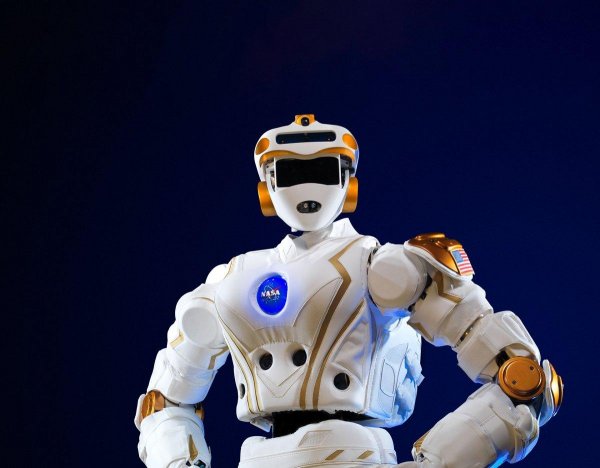
Two British academics are urging the robotics industry to adopt a version of the aviation sector’s flight data recorder — an “ethical black box” that would log a robot’s decisions, sensory inputs, and movements, providing a verifiable record in the event of an accident. The proposal, put forward by Alan Winfield, professor of robot ethics at the University of the West of England in Bristol, and Marina Jirotka, professor of human-centered computing at Oxford University, addresses a growing gap as robots move from tightly controlled factory floors into homes, hospitals, and public spaces.
Winfield and Jirotka draw a direct parallel to commercial aviation, where black boxes and cockpit voice recorders have long been standard equipment. Those devices allow investigators to reconstruct the sequence of events leading to a crash, extract lessons, and improve safety protocols. The researchers argue that robotics lacks an equivalent mechanism, leaving accident investigators without the data needed to determine what went wrong when a robot is involved in an incident.
“Serious accidents will need investigating, but what do you do if an accident investigator turns up and discovers there is no internal datalog, no record of what the robot was doing at the time of the accident?” Winfield told The Guardian. “It’ll be more or less impossible to tell what happened.”
An ethical black box, as envisioned by the pair, would continuously record not only the robot’s actions but also the reasoning behind them, along with sensor data. That log could serve a dual purpose: aiding post-incident analysis and enabling robots to explain their behavior in human-readable language, potentially improving user trust and interaction.
Their call comes amid broader concerns about the governance of artificial intelligence. Missy Cummings, a drone specialist and director of the Human and Autonomy Lab at Duke University in North Carolina, told the BBC in March that the field lacks common standards for testing and oversight. “Presently, we have no commonly accepted approaches,” she said. “And without an industry standard for testing such systems, it is difficult for these technologies to be widely implemented.”
Industry and Academic Initiatives Take Shape
In September 2016, Amazon, Facebook, Google, IBM, and Microsoft formed the Partnership on Artificial Intelligence to Benefit People and Society, a coalition aimed at ensuring AI is developed and deployed in ways that are ethical, fair, and inclusive. Apple joined in January, and since then numerous other technology companies have signed on.
Separately, the Future of Life Institute (FLI), an outreach and charity organization founded by experts from DeepMind and MIT, has developed the Asilomar AI Principles — a set of guidelines for robotics and AI intended to keep the technology aligned with human interests. FLI’s Scientific Advisory Board includes prominent figures such as Stephen Hawking, Frank Wilczek, Elon Musk, Nick Boström, and actor Morgan Freeman.
The proposals from Winfield and Jirotka, along with the industry and academic efforts, reflect a growing recognition that proactive safety measures are needed as AI becomes more embedded in daily life. While the ethical black box remains a concept rather than a working prototype, its advocates argue that establishing clear accountability mechanisms now could prevent costly and dangerous failures later.
Comments
Sign in to leave a comment
No account? Create one
No comments yet.