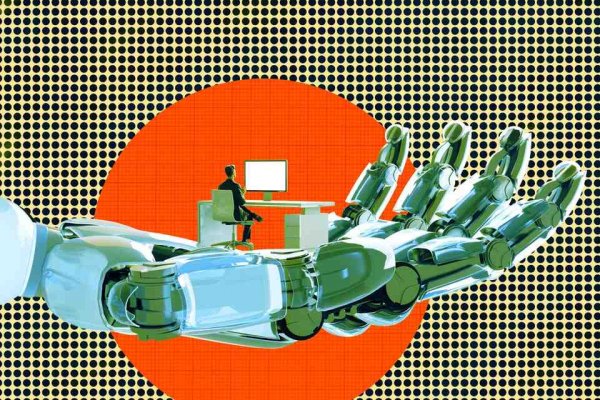
A sweeping new study from the Federal Reserve Bank of Chicago and the Forecasting Research Institute suggests that economists are increasingly bracing for AI to disrupt the job market more severely than previously assumed. The research, which surveyed 69 economists, 52 AI specialists, and 38 “superforecasters,” found that all three groups expect significant AI progress in the coming years—and that faster progress is tied to lower employment rates.
On average, economists assigned a 47 percent probability to “moderate” AI progress by 2030, defined as systems capable of running semi-autonomous research labs, producing high-quality novels, and completing complex projects with oversight. They also gave a 14 percent chance to a “rapid progress” scenario, where AI could finish years of research in days, generate Grammy- or Pulitzer-caliber media, and operate with the agency of a CEO.
The median economist surveyed projected a 1.6 percent decline in the U.S. labor force participation rate over the next five years. That rate—which measures the entire working-age population, unlike the narrower unemployment rate—currently sits at about 61.9 percent. Under the rapid scenario, economists expect it to drop to 59.3 percent by 2030, which would mark the first time in over five decades that the figure falls below 60 percent.
Why the Forecasts Matter
Robert Seamans, an economist at New York University whose previous work was cited in the study, told the New York Times that the findings warrant public discussion. “There’s enough conversation around this that we certainly should, as a country, be talking about what sorts of policies make sense in a world where the way employment and careers work now changes a lot in the next two to five years,” he said.
Despite the grim projections, the researchers caution that a dystopian outcome is not inevitable. They point to historical periods, such as the era before World War II, when market economies experienced severe inequality similar to what the rapid scenario describes. The paper notes that “wealth inequality forecasts under the rapid scenario describe a US economy that would be substantially more unequal than today—but not unrecognizably so.”
The study’s authors emphasize that the actual impact depends on how quickly businesses can harness AI for profitable gains. Past technological shifts, like the introduction of ATMs, did not eliminate bank tellers, suggesting that workers may have some breathing room. Yet the range of expert opinions underscores the uncertainty: even the most accurate forecasters cannot say with confidence whether the future holds a routine economic adjustment or something unprecedented.
Comments
Sign in to leave a comment
No account? Create one
No comments yet.