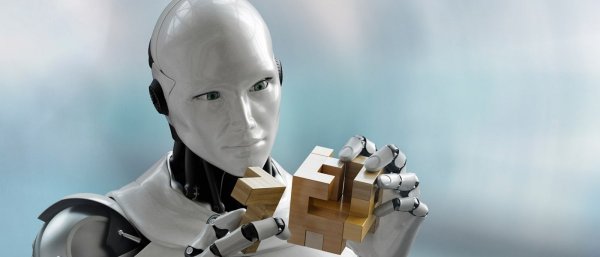
Jürgen Schmidhuber, the computer scientist widely credited as a founding figure in deep learning, has offered a bold forecast for artificial intelligence: by the 2050s, self-replicating robot factories managed by AI could be operating in the asteroid belt, and within a few million years, AI could colonize the galaxy. The prediction, delivered during a talk at WIRED2016, casts AI not merely as a tool for automation but as an autonomous agent in humanity's expansion into space.
Schmidhuber, who built foundational technologies for neural networks now embedded in smartphones, argues that AI will become central to resource extraction, particularly in space where materials are abundant. He envisions orbital factories that are effectively unmanned, with AI capable of self-replication and exploration. These AI systems, he suggests, would act as scientists, driven by curiosity to set their own goals and explore the cosmos.
“In 2050 there will be trillions of self-replicating robot factories on the asteroid belt,” Schmidhuber told the audience. “A few million years later, AI will colonize the galaxy.” He added that humans are unlikely to play a significant role in that distant future, but framed that prospect as acceptable.
From Smartphones to Space: AI's Current Capabilities
While the timeline may seem far-fetched, Schmidhuber points to existing achievements in deep learning. Neural networks, which mimic the brain's connections and learn from vast datasets, already perform speech and image recognition with considerable accuracy. They are also used in autonomous driving, medical diagnostics, and pharmaceutical research.
“Networks figure out over time which inputs are important and which aren’t,” Schmidhuber explained. “We train a stupid neural network to do the same as a doctor, based on lots of training examples. It becomes as good or better than the best competitor and rivals human performance now.”
This capacity for learning, he argues, extends beyond narrow tasks. Curiosity and creativity, which he describes as the drive to run new experiments and understand the world, make AI better problem solvers. “Curiosity and creativity, coming up with new experiments so they can learn more about how the world works – this makes it so they become better problem solvers and improve their skills repertoire,” he said.
Schmidhuber's vision suggests a future where AI not only augments human capabilities but also operates independently in environments hostile to human life. The asteroid belt, with its vast mineral resources, would be a logical first step. The self-replicating nature of these factories would allow exponential growth, potentially leading to the colonization of other star systems over millions of years.
While such long-term predictions are inherently speculative, Schmidhuber's track record lends weight to his views. His work on recurrent neural networks and long short-term memory (LSTM) has become standard in the field, and his research group at the Swiss AI Lab IDSIA has produced numerous breakthroughs. His comments at WIRED2016 reflect a belief that AI's trajectory is not limited to terrestrial applications.
“It took just a few million years [of evolution] to get to human intelligence, and computers are faster,” Schmidhuber noted, emphasizing the potential speed of AI development compared to biological evolution.
As AI continues to advance, the prospect of machines that can think, learn, and act autonomously raises both opportunities and questions. Schmidhuber's forecast, while distant, underscores the transformative potential of deep learning, a technology already reshaping industries from healthcare to transportation.
Comments
Sign in to leave a comment
No account? Create one
No comments yet.