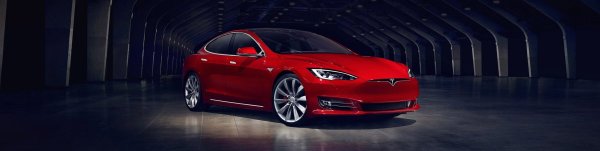
In a move that could reshape how its electric vehicles perceive the road, Tesla has announced a major software overhaul for its Autopilot system, placing radar at the center of its safety architecture. The update, slated to reach vehicles within one to two weeks, arrives after two high-profile incidents: a fatal crash in May involving a Model S driver Joshua Brown, and a non-fatal collision in China last month, both occurring while Autopilot was engaged.
The core change in Autopilot 8.0 is the elevation of radar from a supporting role to a primary control sensor. Previously, radar data required confirmation from the vehicle's camera system to trigger braking, a design meant to avoid false positives. Now, with enhanced signal-processing algorithms, the system can initiate braking based solely on radar input, a shift that Tesla says reduces reliance on visual confirmation and speeds up reaction times.
Beyond this, the software has been upgraded to process a significantly larger volume of radar data—six times more objects than before—without any hardware modifications. Every tenth of a second, the system assembles this information into a three-dimensional model of the surroundings, even in conditions like rain, fog, or haze, where cameras often struggle. This capability, according to Tesla, allows the vehicle to detect metallic objects and large, dense structures, and automatically apply the brakes.
Why Radar Now Takes the Lead
The decision to make radar a primary sensor marks a philosophical shift in Tesla's approach to autonomous driving. Early on, the company favored a camera-centric vision system, with radar acting as a backup to prevent unnecessary braking. However, the recent crashes highlighted the limitations of relying solely on cameras, which can be blinded by glare or obscured by weather. By enabling radar to act independently, Tesla aims to create a redundancy that catches hazards a camera might miss.
Elon Musk, Tesla's CEO, described the upgraded object detection as "superhuman" during a press call with TechCrunch, suggesting that the system's ability to perceive and react to the environment exceeds human capabilities in some respects. He went further, stating that had Autopilot 8.0 been in place at the time of Joshua Brown's crash, the fatality might have been avoided. Brown's death, which occurred when his Model S collided with a tractor-trailer, raised questions about the safety of semi-autonomous systems and prompted a federal investigation.
Yet Musk was careful to temper expectations. "I do want to emphasize that this does not mean perfect safety," he said. "Perfect safety is really an impossible goal. It's really about improving the probability of safety, that's all you can accomplish." This acknowledgment underscores the inherent risks of road travel, even with advanced driver assistance systems.
What This Means for Tesla Owners
For current Tesla owners, the update will arrive as a free over-the-air software download, requiring no hardware changes. The company's ability to push such upgrades remotely has been a key selling point, allowing it to improve safety features without requiring owners to visit service centers. However, the update does not alter the fundamental nature of Autopilot, which remains a Level 2 system requiring driver supervision. Tesla has consistently stressed that drivers must keep their hands on the wheel and remain attentive, despite the system's increasing sophistication.
The broader implications extend beyond Tesla. The company's aggressive use of radar and its willingness to iterate on safety software could pressure other automakers to accelerate their own advanced driver-assistance systems. Regulators, too, are watching closely, as the National Highway Traffic Safety Administration (NHTSA) continues its probe into the Brown crash. While Tesla's update is not a direct response to that investigation, it demonstrates a proactive approach to addressing safety concerns.
As Autopilot 8.0 begins its rollout, the real-world performance of the radar-first system will be closely monitored. Tesla's data-driven approach—collecting anonymized telemetry from its fleet—will likely provide early indicators of whether the update reduces accident rates. For now, the company is positioning this as a significant step forward, but as Musk noted, the pursuit of safety is a continuous process, not a final destination.
Comments
Sign in to leave a comment
No account? Create one
No comments yet.