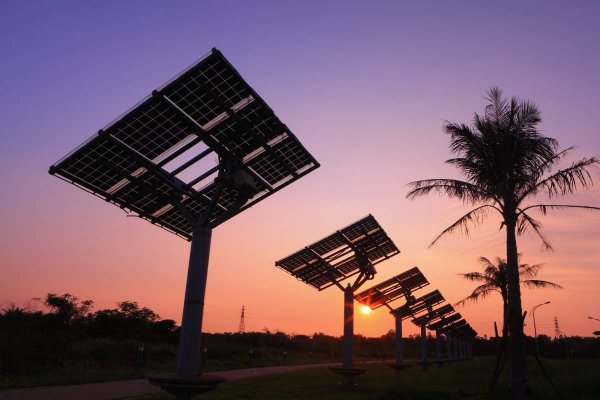
On August 21, solar power facilities across the United States faced a major test as the moon eclipsed the sun for several hours along a path from Oregon to South Carolina. Despite the unavoidable disruption, current infrastructure proved well equipped to handle the event, according to data from SolarEdge, which tracked solar energy generation from over 300,000 systems.
The data showed that while the eclipse caused interruptions, panels resumed harvesting energy not long after the event. Systems as far east as Idaho and Utah reported high levels of production by the time totality was over South Carolina. [IMG_1]
In California, the day was also a success for the California Independent System Operator, which operates the state's bulk electric power system. California has more solar energy capacity than all other states combined, but the eclipse passed without major issues. Mild weather reduced the need for air conditioning, and ample water in reservoirs used for hydroelectric pumps helped engineers maintain power supply.
On the East Coast, Duke Energy was able to service its customers even when the eclipse was at its most dramatic. At peak conditions, 1,700 of the 2,500 megawatts available in North Carolina were blacked out, but the utility kept power flowing. Duke Energy had natural gas generators ready as a backup in case it couldn't meet demand.
Keeping an alternative energy source in reserve is essential for such scenarios, but natural gas generators might become less palatable if the country shifts further toward solar energy in the coming years. Duke is researching large-scale battery technology that could store energy while the sun is obstructed.
"Solar energy, by definition, is an intermittent form," Lio Handelsman, vice president of marketing and product strategy and co-founder of SolarEdge, told Futurism. "Think of our water. Imagine a situation where the water company has to pump from the ground exactly the amount of water that was being used in every faucet in the country — that would be a very tricky thing to do."
Water companies use reservoirs and elevated towers to keep water in reserve, and batteries are the equivalent for solar energy. As solar panels become more cost-effective and efficient, similar improvements in battery technology are crucial.
The transition from fossil fuels to renewable energy benefits the planet, but managing periods when the sun, wind, and flowing water aren't easily harnessed is essential for reliable electricity access. The eclipse demonstrated that current systems can cope, but greater reliance on renewables will increase the challenge.
Editorial Notes