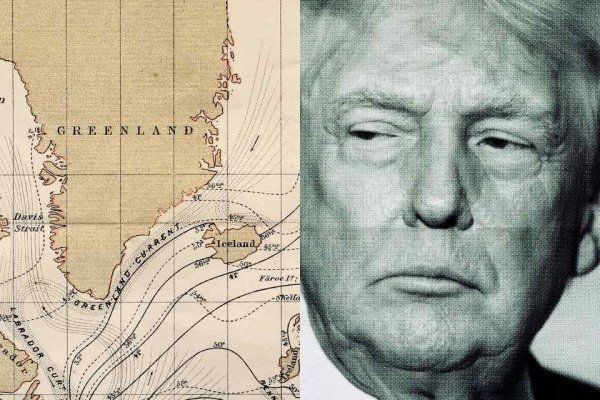
Donald Trump's repeated calls to acquire Greenland, a territory of Denmark, may have a straightforward explanation: as climate change melts the island's ice sheet, valuable minerals are becoming more accessible. The New York Times suggests this cynical motivation, noting that from September 2024 to September 2025, Greenland lost 105 billion metric tons of ice, according to the Danish Meteorological Institute. Between 1985 and 2022, the ice sheet shrank by approximately 2,000 square miles.
Beneath the ice and permafrost lie deposits of graphite, zinc, and rare earth elements—resources that will become increasingly available for extraction as warming continues. This prospect aligns with Trump's public dismissal of climate change, creating a contradiction: if he understands the economic opportunities created by melting ice, he is not being honest with his base.
Strategic and Historical Context
John Conger, an advisor to the Center for Climate and Security, told the NYT that "his fixation on Greenland is an admission that climate change is real." The interest also mirrors strategies of Russia, where the ruling oligarchy is reportedly eyeing similar opportunities in its frozen expanses.
Other rationales for U.S. ownership appear weak. Economic historian Adam Tooze points out that a Cold War treaty with Denmark already grants the U.S. military broad access to Greenland, so national security does not require annexation. Tooze also noted on his podcast "Ones and Tooze" that if Greenland is inadequately defended, it may be because the U.S. has closed multiple military bases there. Oil is unlikely to be a motivator: Greenland stopped granting oil exploration licenses in 2021 due to "climate considerations, environmental considerations and economic common sense," following 50 years of unsuccessful attempts to find oil offshore.
Without an official explanation, the administration's true intentions remain unclear. If Venezuela is any precedent, a direct answer may not be forthcoming.
Editorial Notes