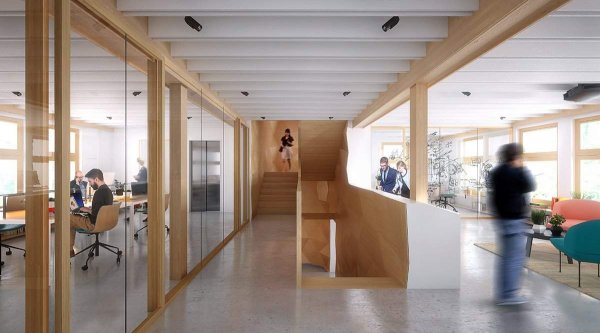
The Harvard Center for Green Buildings and Cities (CGBC) is retrofitting a pre-1940s house in Cambridge, Massachusetts, into HouseZero, a building designed to produce all the power it needs — and more — while making the best use of surrounding light, weather conditions, and location. According to the source material, the project will achieve the most rigorous efficiency standards by a building retrofit to date.
The HouseZero project was conceived by the CGBC as a way to create a new space for its program and, in the process, design a model for an environmentally-friendly, ultra-efficient structure. The building was already owned by the program, so it was not specially targeted. Instead, the success with HouseZero design demonstrates that green design is achievable for average existing structures.
The retrofit blends smart design, green materials, and emerging technologies for maximum effect. The project's goal is to transform the space into the building of the (green) future, HouseZero.
The source material does not provide specific details on the technologies used, the timeline for completion, or the exact efficiency metrics. It also does not include quotes from project leaders or information on cost. What remains clear is that the CGBC intends HouseZero to serve as a replicable model, showing that ultra-efficient retrofits are possible for ordinary pre-1940s buildings.
Editorial Notes