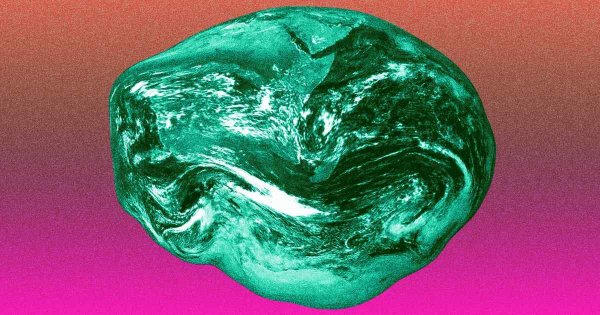
Melting Arctic ice is doing more than raising sea levels — it is physically reshaping the Earth's crust, and the deformations are larger than scientists previously believed, according to a Harvard study published last month in the journal Geophysical Research Letters.
The research found that the planet's outermost layer behaves elastically over short timescales but flows like a slow-moving fluid over thousands of years. That means crust that was pressed down by ice age glaciers is still rebounding — and the process is being compounded as climate change melts more ice.
"On recent timescales, we think of the Earth as an elastic structure, like a rubber band, whereas on timescales of thousands of years, the Earth acts more like a very slow-moving fluid," Harvard planetary scientist Sophie Coulson said in a press release. "Ice age processes take a really, really long time to play out, and therefore we can still see the results of them today."
Parts of the crust around the Arctic are still expanding after the weight of ice age glaciers — which ended about 11,000 years ago — was lifted, the study says. As more ice melts, those expansions and warping effects compound, creating increasingly complex landscapes.
Why the Findings Matter for Science and Climate
Monitoring the crust's ballooning is valuable for studying and predicting tectonic movements, earthquakes, and other geological processes, Coulson said. The study also raises a climate concern: as Antarctic ice melts and the crust pushes outward, it may deform and push bedrock out of position, further displacing ice and creating a cycle that leads to even greater melting.
The research suggests these deformations can influence ecosystems in an area for thousands of years, though the study does not specify which ecosystems or regions face the most immediate effects.
Editorial Notes