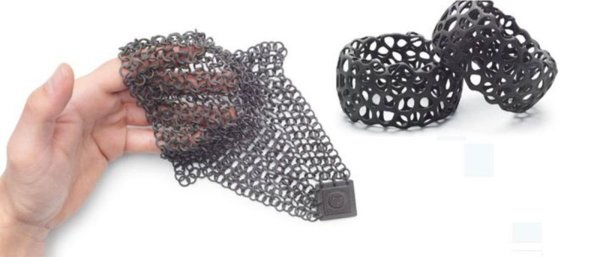
HP has released two new 3D printer models, the Jet Fusion 3200 and Jet Fusion 4200, marking its first new products since entering the 3D printing market in 2014. The high-end machines do not require lasers, unlike most rivals in their range, and are scheduled to be available by the end of the year.
According to the source material, the printers are designed to operate at half the cost and ten times the speed of other printers on the market, while producing sharp, fine, high-definition edges. Ramon Pastor, Vice President and General Manager of HP's 3D Printing Business, said in a statement: "I will be, again, pushing the limits of 3D printing as we know today—with performance, with cost, with voxel-by-voxel (volumetric pixel) control."
How Multi Jet Fusion Works
HP's Multi Jet Fusion technology uses thin layers of powder combined with a chemical agent. The system controls thermal conductivity to modify how parts are fused, enabling high-resolution output. The printers have a print area of 16 inches by 12 inches by 16 inches, containing 2.4 teravoxels—a teravoxel being one trillion voxels.
The source notes that the printers could print electronics within the parts they create by using conductive materials printed at the voxel level. HP is also collaborating with materials companies to offer a range of substances, from high-performance thermoplastics to low-cost commodity plastics. The first-generation models print in only one color, but HP intends to address that limitation.
Pricing and Market Position
The entry-level Jet Fusion 3200 carries a price tag of $130,000. Pricing for the Jet Fusion 4200 has not been announced, though it would presumably be more expensive than the 3200. At present, HP's 3D printers are aimed at manufacturers rather than consumers.
The source material describes the production speed as 340 million voxels per second and states that, on a commercial level, this cost and capability give HP an advantage over its rivals as of the date of the original report. HP is refining the technology with input from industry leaders in manufacturing, automobile, and consumer goods, with the aim of delivering voxel-method systems that enable both superior prototypes and small-scale production.
Editorial Notes