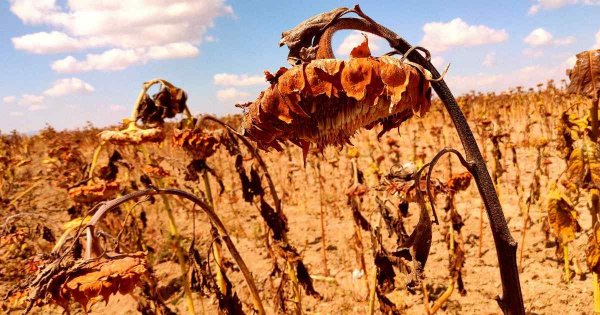
The contiguous United States just experienced its hottest July on record, with an average temperature of 76.89 degrees Fahrenheit, according to the National Oceanic and Atmospheric Administration. That figure edges past the previous benchmark set in July 1936, during the Dust Bowl era, when severe drought and dust storms devastated the Great Plains.
Meteorologist Jeff Masters of Yale Climate Connections told the Associated Press that surpassing Dust Bowl records is a troubling sign. “It’s not good when you’re breaking records from the Dust Bowl, which we are in this case,” he said. “That was a crazy sort of situation where you put tens of millions of people in motion. You had this great migration because of the drought and the heat that hit the center of the US — just a cataclysmic event in US history.”
Masters added, “If we’re exceeding records from the Dust Bowl, that says that we’re in deep trouble.”
Unlike the 1936 heat, which was concentrated in the Midwest, this July’s warmth spread across all 48 lower states. Every state recorded temperatures at least one degree Fahrenheit above the 20th-century average, NOAA data shows.
El Niño and Climate Change Converge
The current heat wave stems from a combination of a strong El Niño — a natural climate pattern that warms Pacific Ocean waters — and the long-term effects of human-caused climate change. The Dust Bowl itself was also driven by both natural variability and human actions, such as poor land management practices.
While El Niño is a cyclical phenomenon, the underlying warming trend from greenhouse gas emissions amplifies its effects. The result is a summer that has pushed infrastructure and emergency services to their limits.
Drought and Wildfires Worsen
According to Yale Climate Connections, July 2026 saw the second-worst drought conditions on record for the contiguous U.S. The U.S. Drought Monitor reported that 71 percent of the lower 48 states experienced abnormal dryness or drought during the first week of August. Direct damages from these conditions exceeded billions of dollars in the first half of the year.
Major wildfires are burning across the U.S. and Canada, exposing millions to hazardous air pollution. The Economist estimated that smoke from these fires contributed to roughly 4,000 premature deaths across North America in a single week last month.
Masters warned that this may be “one of the coolest years we’re gonna experience for the rest of our lives.” He urged a dual approach: “stop burning so many fossil fuels” and “spend money to adapt to the new climate that we’ve put in place.”
Policy Direction Under Scrutiny
Despite the record heat, federal policy has moved toward expanding fossil fuel use. The Trump administration has aligned closely with the industry, seeking to reopen coal-burning plants. Meanwhile, the rapid growth of AI data centers, powered by gas generators, is adding to greenhouse gas emissions.
These choices come as the nation faces what scientists describe as a critical juncture. The combination of extreme heat, drought, and wildfires underscores the need for both mitigation and adaptation strategies, but the political and economic momentum remains heavily weighted toward continued fossil fuel consumption.
For now, the data is clear: the summer of 2026 has set a new, unwelcome milestone in the nation’s climate history.
Comments
Sign in to leave a comment
No account? Create one
No comments yet.