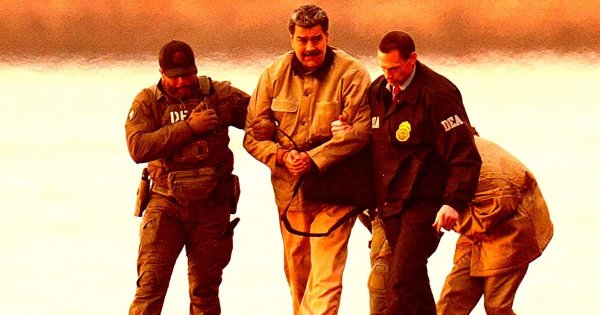
An active-duty U.S. Army soldier has been arrested and charged with insider trading after allegedly using classified information to place lucrative bets on the prediction market platform Polymarket, according to the U.S. Department of Justice. The case, unsealed in Manhattan federal court, accuses Gannon Ken Van Dyke, a special operations soldier stationed at Fort Bragg, of wagering more than $33,000 on the outcome of the U.S. invasion of Venezuela in early January.
Van Dyke’s bets, placed in the days before the attack, reportedly earned him over $410,000 in winnings. The indictment alleges he bet that Venezuelan President Nicolás Maduro would be “out” and that the U.S. military would “show up in Venezuela” by January 31. The timing of the trades immediately raised suspicions among market observers, who noted the unusual precision of the wagers.
The charges include unlawful use of confidential information for personal gain, commodities and wire fraud, and theft of nonpublic government information. According to the DoJ, Van Dyke allegedly moved most of his profits to an offshore cryptocurrency wallet and then to a new brokerage account, while also attempting to delete his Polymarket account and change the email associated with his crypto exchange to conceal his involvement.
“Rather than safeguard that information as he was obligated to do, Van Dyke decided to use that classified information to place trades on a prediction market platform for his personal profit,” the indictment states. “Van Dyke subsequently tried to conceal his unlawful use of classified US Government information by attempting to obscure the source of his unlawful proceeds and to disguise his connection to the accounts linked to the illicit trades.”
This is not an isolated incident. Israeli authorities have previously arrested several individuals for similar bets on conflicts in the Middle East, suggesting a pattern of insider trading on platforms like Polymarket. The platform, which allows users to trade on the outcomes of real-world events, has faced criticism for enabling the monetization of nonpublic information.
Polymarket responded to the arrest by emphasizing its cooperation with law enforcement. “Insider trading has no place on Polymarket,” a representative said. “Today’s arrest is proof the system works.” However, critics argue that the platform’s anonymity and lack of oversight make it a breeding ground for such abuses.
The case also drew a reaction from President Donald Trump, who remarked that the “whole world, unfortunately, has become somewhat of a casino.” The comment, made in a statement, did not address the specifics of the case but underscored the growing concern over the intersection of finance and global events.
As the legal proceedings continue, more details are likely to emerge about Van Dyke’s role in the January 3 attack and the extent of his trading activities. The case raises broader questions about the regulation of prediction markets and the need for safeguards to prevent the misuse of sensitive information.
Comments
Sign in to leave a comment
No account? Create one
No comments yet.