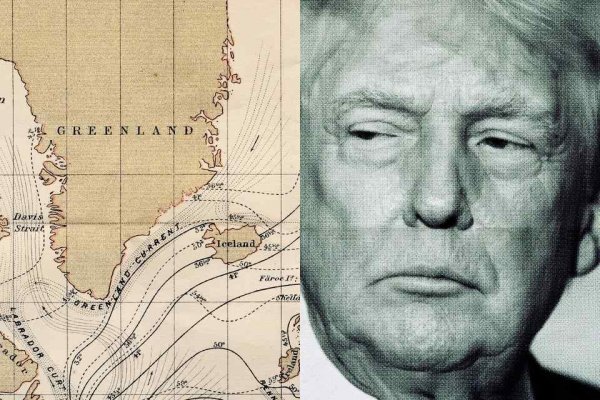
President Donald Trump's persistent interest in acquiring Greenland, a semi-autonomous territory of Denmark, may be rooted in a calculated bet on the effects of climate change, according to analysts cited in a recent New York Times report. The island, which sits in the Arctic Ocean, is losing ice at a rate that could soon expose vast reserves of minerals, a prospect that some see as a more plausible explanation for the president's fixation than security or oil concerns.
Data from the Danish Meteorological Institute shows that between September 2024 and September 2025, Greenland lost 105 billion metric tons of ice. Over a longer period, from 1985 to 2022, the ice sheet has shrunk by roughly 2,000 square miles. As the ice recedes, it is expected to reveal deposits of graphite, zinc, and rare earth elements—materials critical for modern technology and defense applications.
John Conger, an advisor to the Center for Climate and Security, told the NYT that Trump's fixation on Greenland is effectively an admission that climate change is real. This observation underscores an apparent contradiction: the president has publicly dismissed climate change as a hoax, yet his interest in Greenland may hinge on the very phenomenon he disputes.
Why Other Explanations Fall Short
Alternative rationales for the acquisition have been examined and largely dismissed. Economic historian Adam Tooze pointed out that a longstanding Cold War treaty with Denmark already grants the U.S. military broad access to Greenland's territory. If the U.S. feels the island is undefended, Tooze noted on his podcast, it may be because Washington has allowed its own bases there to deteriorate since the Cold War ended.
Oil, often a driver of U.S. intervention, is also an unlikely motive. In 2021, Greenland's government halted oil exploration licenses, citing climate and environmental concerns, after five decades of unsuccessful drilling attempts. This decision effectively closed the door on petroleum as a potential prize.
Some observers see a parallel with Russia, where the ruling elite is reportedly eyeing similar opportunities as its own frozen territories thaw. This alignment of interests, though ironic given geopolitical tensions, suggests that resource access in a warming Arctic is a shared strategic consideration.
Without official confirmation, the administration's true motivations remain speculative. The president's history of providing evasive answers, as seen in other contexts, offers little clarity. What is clear is that Greenland's ice loss is accelerating, and the mineral wealth beneath it is becoming an increasingly tangible factor in international calculations.
Comments
Sign in to leave a comment
No account? Create one
No comments yet.