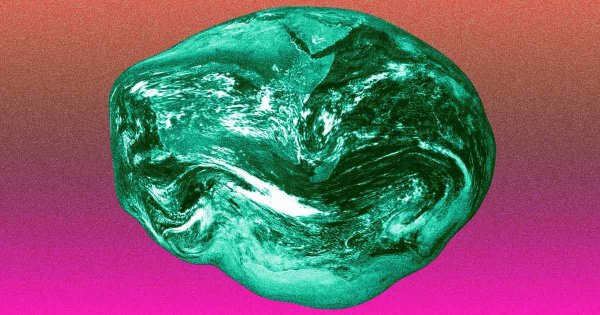
The melting of polar ice sheets is doing more than raising sea levels—it is physically warping the outermost layer of the planet, according to new research from Harvard University. The study, published last month in the journal Geophysical Research Letters, reveals that Earth's crust is more elastic than previously understood, and that the rebound from melting ice can deform the planet's shape in ways that persist for thousands of years.
Scientists have long known that the crust rebounds after the weight of ice is removed, a process called glacial isostatic adjustment. But the Harvard team found that this rebound is not uniform, and that the crust does not always return to a perfectly spherical shape. Instead, the deformations are larger than earlier models suggested, and they can have lasting effects on local ecosystems.
One striking example is the Arctic region, where parts of the crust are still expanding—like a slow-motion balloon—after the weight of the last ice age, which ended about 11,000 years ago, was lifted. As climate change accelerates the melting of modern ice sheets, this ongoing expansion is compounded, creating an increasingly complex landscape.
Why the Crust's Slow Motion Matters
Harvard planetary scientist Sophie Coulson explained in a press release that the Earth's behavior depends on the timescale. On recent timescales, the planet acts like an elastic rubber band, but over thousands of years, it behaves more like a very slow-moving fluid. “Ice age processes take a really, really long time to play out, and therefore we can still see the results of them today,” she said.
Monitoring this slow deformation is not just an academic exercise. Understanding how the Earth's shape changes helps scientists study and predict tectonic movements, earthquakes, and other geological processes, Coulson noted. The data could improve models of seismic activity and volcanic behavior, which are influenced by the stress and strain in the crust.
The implications extend to climate change as well. As Antarctic ice melts, the crust pushes outward, and this movement can deform and shift bedrock out of position. That displacement can, in turn, further destabilize ice sheets, potentially creating a feedback loop that accelerates melting.
The study adds a new dimension to the conversation about climate change, which often focuses on sea-level rise and atmospheric warming. By showing that the solid Earth itself is responding to ice loss, the research underscores the interconnectedness of the planet's systems—and the long-term consequences of human-driven warming.
While the findings are based on modeling and observational data, the researchers emphasize that the effects are measurable and significant. The next steps, they say, are to refine the models with more detailed observations of crustal movement, particularly in polar regions where ice loss is most rapid.
Comments
Sign in to leave a comment
No account? Create one
No comments yet.