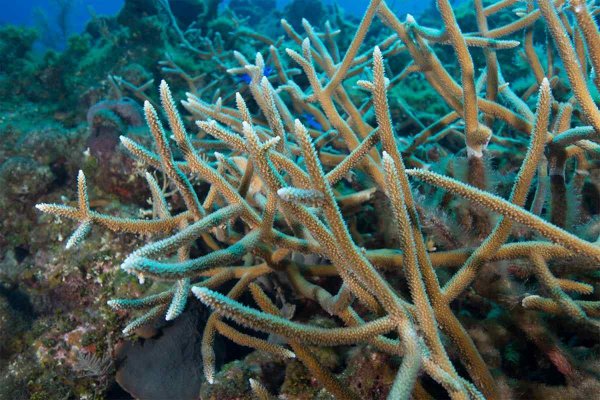
Scientists in Florida are adopting a laboratory technique from the United Kingdom to make corals reproduce more frequently, a move they hope will dramatically accelerate the slow process of restoring endangered reef systems. The method, developed by researcher Jamie Craggs at the Horniman Museum in London, artificially recreates the precise environmental cues that trigger corals to release larvae, potentially increasing spawning from once a year to once a month.
The urgency is clear: at current restoration rates, it would take roughly 550 years to remove Staghorn coral — a key species along the coasts of Florida, the Bahamas, the Caribbean Islands, and the Great Barrier Reef — from the endangered species list. Scott Graves, director of the Florida Aquarium’s Center for Conservation, told Futurism, “What we are trying to achieve is to dramatically scale up restoration if we are going to get anywhere.”
Why Spawning Matters
Traditional coral restoration relies on a process called asexual reproduction, where fragments of coral are broken off, grown in a lab, and then replanted on the reef. While this method has been widely used, it has a significant drawback: the new corals are genetic clones of the parent. Rachel Jones, project manager of the Bertarelli Programme in Marine Science at the London Zoo, explained to Futurism, “The bits you grow back are just clones, so you are not creating a very diverse population.”
Spawning, by contrast, is sexual reproduction, producing larvae with unique genetic combinations. This diversity is critical for reefs to withstand environmental stresses. Jones noted, “If you try to do restoration, what you are hoping is that some of the genotypes that you put back on the reefs are going to survive, you hope that some of them are suited to the environment they find themselves in.”
Genetic variety has been shown to make corals more resilient. For example, researchers in Hawaii found that areas most affected by coral bleaching often had the least genetic diversity. This is particularly relevant for Florida’s Pillar coral, which is currently being devastated by a disease outbreak.
Scaling Up Larval Production
The new system at the Florida Aquarium uses artificial lighting and microprocessors to simulate the climatic changes that naturally trigger spawning. Graves hopes to trick the corals into spawning more frequently. “From a research perspective, for someone like myself who is impatient, [a yearly spawn] is really not ideal,” he said. “Because you learn new things in the first few weeks, then you want to try something new and you can’t.”
Craggs, who will bring wild corals into the lab, emphasized that the initial spawns will align with natural cycles, but the goal is to eventually break that pattern. “Initially spawning will happen at the same time as it does in the wild, and then we are looking to start to break the natural cycle to have lots more spawning [events],” he told Futurism.
Producing more larvae increases the odds that some will survive to adulthood. Currently, “out of millions [larvae] we settle [on the reef], we might only get to survive a hundred or a thousand. This is a tremendous bottleneck,” Graves said. “Within the next year or two, we hope to be able to settle and grow millions of sexual recruits.”
Comments
Sign in to leave a comment
No account? Create one
No comments yet.