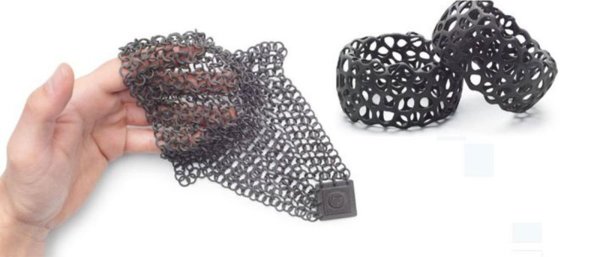
HP has entered the industrial 3D printing market with two new models, the Jet Fusion 3200 and Jet Fusion 4200, which the company says can produce parts at a fraction of the cost and much faster than existing systems. The printers, which will ship by the end of the year, are the first products to emerge from HP's 3D printing division since it announced its entry into the field in 2014.
Unlike many competing high-end printers that rely on lasers, HP's technology uses a multi-agent process. Thin layers of powder are combined with a chemical agent, and the system controls thermal conductivity to fuse materials precisely, enabling sharp edges and fine details. According to HP, the printers can operate at ten times the speed and half the cost of other systems on the market.
Ramon Pastor, Vice President and General Manager of HP's 3D Printing Business, said the company is pushing the boundaries of current 3D printing technology, citing performance, cost, and voxel-by-voxel control. A voxel is a volumetric pixel, and the Jet Fusion printers can manage 340 million voxels per second, according to HP. The print bin measures 16 by 12 by 16 inches, containing 2.4 teravoxels, or trillion voxels.
Potential for Embedded Electronics
One of the most notable features of the new systems is the possibility of printing electronics directly into parts. By using conductive materials at the voxel level, HP says the printers could eventually create components with integrated circuitry, eliminating separate assembly steps. This capability is still in development, but it could have significant implications for manufacturing industries.
HP has been working with partners in manufacturing, automotive, and consumer goods to refine the technology. The goal is to deliver systems that can produce not only high-quality prototypes but also small-scale production runs. The company is also collaborating with materials suppliers to offer a range of substances, from high-performance thermoplastics to low-cost commodity plastics.
Currently, the printers only produce single-color parts, but HP has indicated plans to address that limitation in future generations.
Pricing and Market Focus
The Jet Fusion 3200, the entry-level model, is priced at $130,000, making it clear that HP is targeting manufacturers rather than hobbyists. The price of the Jet Fusion 4200 has not been announced, but it is expected to be higher. Despite the cost, HP's combination of speed, precision, and the potential for embedded electronics gives it a competitive edge in the industrial 3D printing sector.
Industry observers note that the ability to print electronics inside parts could be a game-changer for the industry, but it remains to be seen how quickly that feature will become commercially available. For now, the Jet Fusion series offers manufacturers a faster, more cost-effective way to produce prototypes and small batches, with the promise of more advanced capabilities on the horizon.
Comments
Sign in to leave a comment
No account? Create one
No comments yet.