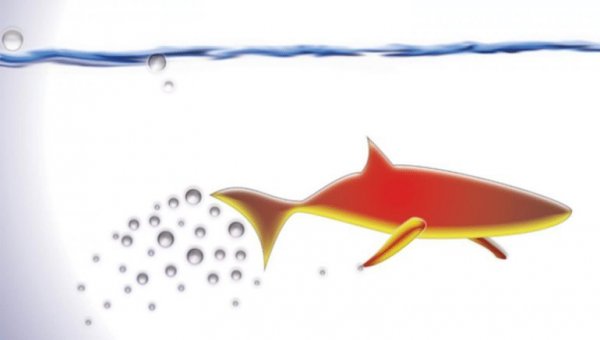
Engineers at the University of California, San Diego, have developed a fleet of 3D-printed micro-robots that could one day swim through the human bloodstream to neutralize toxins or deliver medication to precise locations. The tiny devices, which resemble fish, are thinner than a human hair and are part of a research effort to bring science-fiction-like capabilities into clinical practice.
The project is led by professors Shaochen Chen and Joseph Wang of the university's Nano Engineering Department. Their work builds on the concept of miniature robots that can operate inside the body, a notion popularized by the 1966 film 'Fantastic Voyage,' where a submarine crew is shrunk and injected into a patient's bloodstream. Chen and Wang are not shrinking themselves, but they are applying similar principles to address microscopic medical challenges.
The micro-fish are fabricated using a high-resolution 3D printing technique called microscale continuous optical printing (μCOP), which was developed by Chen. Unlike conventional 3D printers that extrude plastic, μCOP uses two million tiny mirrors to direct a beam of UV light onto a photosensitive material. The material solidifies where the light strikes, allowing the team to create complex shapes with micrometer precision.
The fish are designed as delivery vehicles. Platinum nanoparticles attached to their tails react with hydrogen peroxide, generating propulsion. Magnetic particles on their heads allow external magnetic fields to steer them. In laboratory experiments, the fish were placed in a solution containing a toxin, such as bee venom. When the fish encountered the toxin, the particles on their bodies emitted a red glow, and the fish 'swam through the solution and nabbed the toxin along the way,' according to the researchers. The intensity of the glow was monitored to track the interaction.
Beyond removing harmful substances, the micro-fish can also be used to deliver therapeutic agents. Chen and his team aim to use the robots for 'targeted drug delivery or as sensors,' potentially enabling treatments in parts of the body that are difficult to reach with conventional methods, while minimizing side effects.
Other Miniature Robots in Development
The UCSD team is not alone in exploring magnetically controlled micro-robots. Researchers from Boston Children's Hospital and the University of Houston have developed 'millirobots' — small magnetic robots designed to swim through blood and spinal fluid. These robots can be guided by a physician to a specific site, such as a blocked passageway or a fluid buildup, and then used to inject drugs directly into the area. The Boston-Houston team is still working on scaling down the robots to the appropriate size for clinical use.
The micro-fish technology is still in the development phase, but it has received grant support from the National Science Foundation and the National Institutes of Health. While the prospect of having robots swim through the human body may seem like a distant future, the funding and ongoing research suggest that such applications could eventually reach medical practice.
Comments
Sign in to leave a comment
No account? Create one
No comments yet.